Someone had bumped into me and got into my personal space. I did not react appropriately to just a minor incident like that. My wife told me that I really need to start getting help for that or it would not be a positive relationship moving forward.
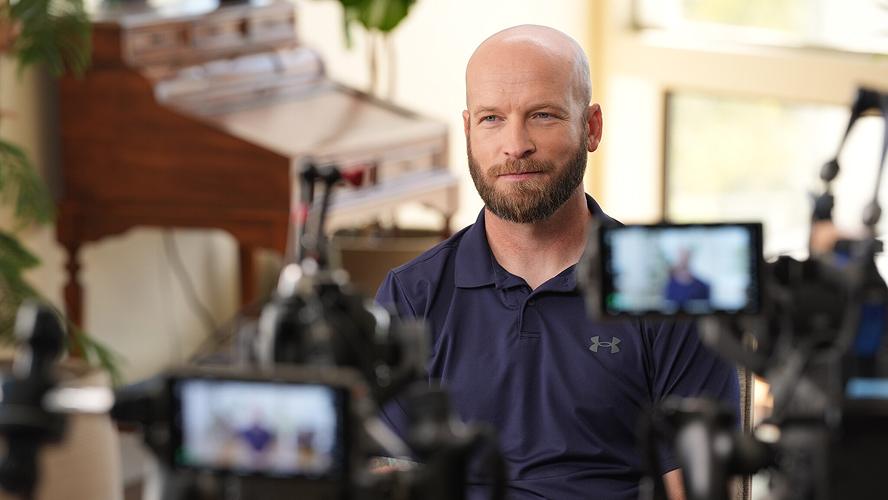
My name is Ted, United States Marine Corps Reserve, Air Defense Officer, 36 years in the Marine Corps. So when I first came back from my combat tour in Iraq, my wife did notice some initial changes and I kind of just blew them off.
Avoiding things that were enjoyable or just avoiding things that I knew were triggers for myself, not going to crowded spaces. Even though I love the city of New Orleans, you could walk in some areas where the smells or the view of that can bring you back into some of those triggers, etc. And those can be challenging at times.
I was not my typical extroverted self and started becoming more reclusive and introverted. Did have some issues with insomnia, but I'd also did have those night terrors, etc., where my wife would be afraid to wake me up or I would wake her up from those, as well.
Getting a token by your bedside always helped. So when you woke up, you knew you were not in Iraq anymore, you were back safe at home. The current healthcare system at the VA does typically all group therapy, but the Vet Center here in New Orleans provides me individual care. That is the type of care that I prefer.
So my official mental health diagnosis is depression, anxiety. The type of treatment that I received was a CBT, which is cognitive behavioral therapy. They teach you more of how to deal with your new normal. You accept the changes that you are in, you understand what are your triggers in your mental health journey.
I like to relate it to public speaking. It's not necessarily you're talking with butterflies in your stomach, but learning to take those butterflies and fly in unison. So, cognitive behavioral therapy kind of does that, where you understand what your issues are, what your triggers are, and how do you modify your lifestyle so you can have a good quality of life.
Maybe giving yourself some acupressure in your hand and telling yourself, "Hey, you're not in Iraq anymore." Doing some breathing techniques, etc., to bring you back to reality understanding that this is just your new normal. You'll get through it.
I do like to run. It's a low gear-related thing where it's like biking or boxing or fishing, etc. All I need is a pair of tennis shoes, shorts, and a T-shirt.
As a leader, you have to say it's okay not to be okay. And if you set the example yourself, you have to be able to take care of yourself first to be able to provide your a hundred percent to the team.
Through those multiple sessions, picking up some tools, using the breathing techniques, all of those things led to my journey where I am today.
The reason why I wanted to come and share my story with Make the Connection today was because I've seen your guys' videos. I think it's a great channel that is provided for Veterans to potentially see themselves, see someone else's journey and say, "Hey, that's me and I could be somewhere else with a better quality of life. Maybe I should give VA a chance."