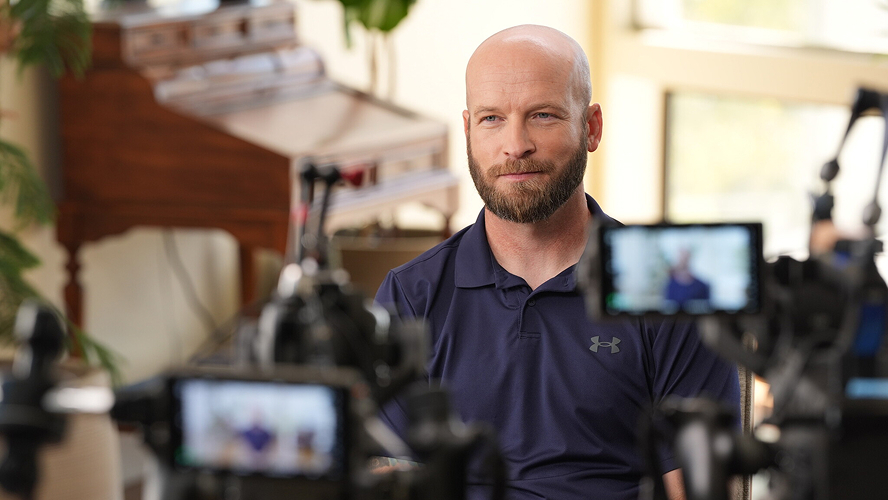
David:
I think most of it was loneliness, but slipping back into depression, I think, is something that's very common.
Lawrence:
The loss of my really good friend over there in 2012, that affected me quite a bit, and it still affects me today and every day.
Allen:
I was not the kind of person that you could have a relationship with. I didn't really have any close relationships with people at all.
Daryl:
Sometimes the depression can be so crippling. Like, you can't get out of bed. You can't do anything, and there's physically nothing wrong with you. You just can't move. I started drinking again. You know, my family was like, "You need to go back to the VA."
Mary:
Had feelings of anxiety and depression, and just didn't know how to handle those feelings. Everyone experiences depression differently. Accepting it can be really hard. Not fighting it and not being afraid of it, I think those are probably the most important things.
David:
And I would be in my bed for hours, just, you know, laying there and kinda hate life and yourself a little bit too.
Mary:
I remember when I finally did go talk to a mental health counselor, describing the feeling of, like, I was just bending over backwards and farther and farther and farther, and I just got to the point where I couldn't bend anymore like I was gonna break.
Allen:
The treatment of the depression was almost immediate. First started taking the medications. It took a while for them to kick in, and once they kicked in, I felt a lot calmer.
David:
There's a lot of things that you might not know about yourself or that you keep locked up and, you know, not addressing. Therapy or, you know, anything like that can really just make you aware of those things, and I think that's important.
Daryl:
I've been going to, on a more consistent basis, therapy with the VA, and my therapist, me and her have a great relationship. I look forward to, you know, our meetings when I can just sit down and talk to her.
Mary:
After I would say about, you know, three or four or five sessions, and that's when I started to feel like this is starting to get a little bit better.
Lawrence:
Get a good understanding of, like, what I'm feeling internally, and then basically know how to deescalate the anxiety and depression. Tools for that was was huge for me. Going to therapy, taking the medication, going to the gym, being with friends and family, doing the things that I enjoy, my hobbies, things like that, I would say it's improved my relationships significantly.
Allen:
Every bit of therapy I've been in was helpful in one way or another. You're worth the work. It's hard work. It's not easy work.
Mary:
I've gone through tough periods before and come out of them, and I can go through this tough period and come out of it as well.
David:
One of my hobbies is just having too many hobbies. I like to just try doing a lot of different stuff.
Lawrence:
Be vulnerable. I think a lot of Veterans struggle with vulnerability. That is the key thing with healing.