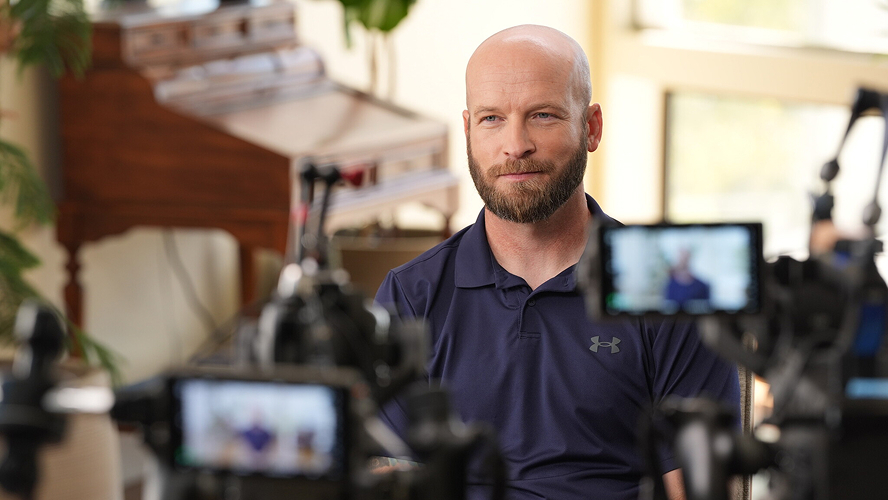
Probably at the time when I was going through Battlefield Airmen, you know, I didn't realize the exact stressors that it was putting on me, mainly because I was not aware of mental health in general. I just thought, you know, if you're tough-minded, you could make it through anything. 14 years later, I found out that wasn't probably the best way to go about it, and I was probably avoiding a lot of things than actually dealing with them.
Hi, my name's Parth. I served in the United States Air Force. I was a Public Health 4E and I served from 2013 to 2024. I was in charge of the COVID Operations Center, which pretty much for Hill Air Force Base, and it took long hours anywhere from 12 to 16 hour days. To me, I found purpose in it at the same time, but I also let it drain me.
I come from an Indian background, and so the culture in Indian mental health is very much focused around, ‘men don't have issues, and if you do, you deal with it.’ ‘Men aren't supposed to feel anything.’ ‘Men aren't supposed to deal with emotions.’ Just the stigma behind it. And then finally merging that with joining the military, where the military has this toughness factor to it where it's like you're supposed to be built tough, you're supposed to get over it because there's a mission that needs to get done at the end of the day. And so that factor being built into my own, you know, upbringing and the cultural background of it just didn't mix well.
I was transitioned out because of medical issues, primarily mental health being one of them. And so thankfully I was, I was at least afforded the opportunity to go through mental health therapy and work on that transition as I'm leaving the military. If I didn't get that treatment, I'd probably still be stuck.
Well, I went through IOP Intensive Outpatient Program, so it was anywhere from four to six hours of therapy per day for about five days a week. For me, it kind of kicked off with just anxiety. Later on, diagnosed with a major depressive disorder, and then chronic PTSD. I would have numerous panic attacks throughout the day. That led to loss of sleep was a major one, and it wasn't, when I went until mental health therapy that I was taught about what insomnia really is.
When you join the military, I don't think you realize the depth of the impact that would have on work- life-balance. Family life, it did impact it big time. She was also active duty at the same time that I was. Just being in the military takes a toll on you, and so at the end of the day, after a 12 or 16 hour day, you know it, it is hard to give that focus back to your family. And so that led to major marital issues.
To be honest, I didn't even know what I was looking for. Didn't even know much about mental health. There's so many different options out there, and so for me it was group therapy. I, I needed someone to talk to. I needed someone to talk my problems out to, and it was just a perfect environment and it's something that I've been missing my entire military career, just not having the support system there to be able to talk to someone, and it made tremendous difference.
I think the greatest tool that I got out of therapy was how to finally ground myself. Meditation was a big one: bring back that control to myself. I carry around this, this beed everywhere and, and for me, it's a grounding tool just because I can go ahead and have something physical to hold onto rather than letting my thoughts just keep running. Therapy only works if you're willing to participate. Really be honest with yourself. If you are willing to put some time and trust into the process, you need to put that trust into yourself at the same time.
As I was going through therapy and I couldn't list out a single hobby of mine. One of the ones that I've picked up tremendously after is just spending time on the motorcycle. You know, I can kind of disappear and focus in on my thoughts, but more importantly, it was being conscious. Just serving in the military, you kind of lose a lot of identity for who you are because you're part of this bigger mission. And so I think that's probably the biggest benefit is finding yourself after. I'm now a big advocate for men's mental health, I would say, you know, you gotta be willing to participate. Therapy only works if you're willing to participate. What I mean by participate is really be honest with yourself and talk about your issues.