I found myself getting ready for an exam to become qualified in submarines, and I was up for about 36 straight hours. And I had kind of a out of body experience where I was able to step outside of myself and see what was happening to the person that was isolated there. And it scared me.
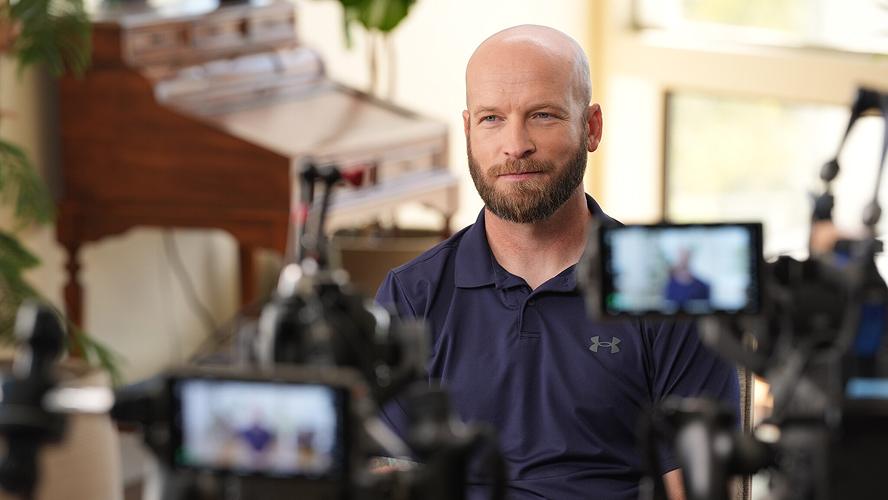
My name is Thomas. I served in the United States Navy on submarine duty, and I served as a Sonar Technician between the years of 1995 and 1999. Being confined on a metal tube underwater for weeks and, and months at a time can really do a number on your mental. So I had to play a trick on my brain to be able to believe that the sun and the moon don't exist. I had to focus on what was in front of me and just block out the external things. You do something for so many years that becomes your life. How do I figure out what else is left of me that hasn't been tapped into.
So my experience transitioning out of the military was, was a long one. It took me probably about 14 years to actually figure out what else I was gonna do in my life. So I think probably the worst time for me was when I was working in customer service. I had an injury to my shoulder. I started that process going through workers' comp and when you're on workers' comp, you're not getting paid what you normally get. You getting the two thirds of that. Not being able to work and not being able to provide for my family, it does some damage to, to the manhood of a man. If he truly wants to be what he has signed up to be, and I couldn't fully be that. So I finally had to get real.
There's the stigma that, that a man, particularly in the military, is not supposed to seek out help because it's a sign of weakness. So I was kind of stuck until I realized this isn't working and I need to talk to some people. It started to really wear me down. I heard a lot of negative stuff from, about the VA till another Veteran buddy of mine, he encouraged me to go. He met me there. I was able to go in and file paperwork and I'm better for it. It was a foreign concept for me to actually go talk to someone. Sometimes you have to just get over yourself and do what's necessary. So when I did that I was able to kind of release. I understood that, at some point, the bottling up runs out of space to bottle, and then it blows the top, and that's when people snap and, I didn't want it to be that guy.
Sadly, you know, 14 years ago, my father passed away. My father took his own life. I realized that when you don't open up and share what's going on, that's what happens. I don't believe in suffering in silence, and I always say that isolation is the devil. You know, when I'm thinking of some of my Veteran peers, I need to reach out and check in, do a buddy check to see if they're okay, because I want somebody to do the same with me.
I have a very strong support system, which is, you know, number one, my family. I have so much goodness in my life that it's hard to really stay focused on negative things. My hobbies are family time, serving at church. My advice to other Veterans is share your story, being vulnerable enough to know that, ‘Hey, you are not alone in this.’ It's about me paying it forward and encouraging other people to duplicate this process.