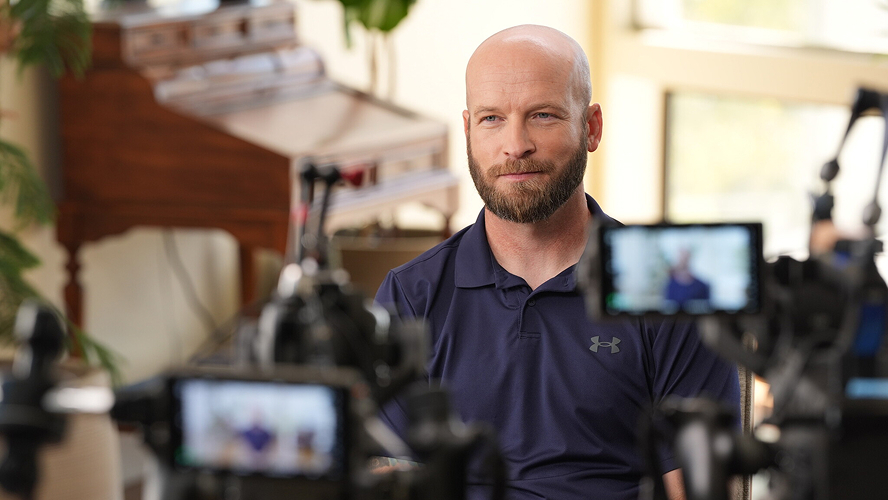
I was in the last major battle in Korea with the Seventh Infantry Division, Porkchop Hill. We were mostly fighting out of trenches and dugouts. I saw thousands of white pigeons that flew up in the air with a bunch of people all dressed in white, praying, I guess, that their prayers had been answered, that for the time being there was an armistice. And the armistice exists to today.
Hello, I am Eddie. I served in the army 11P40PL I was pretty big at that time, I guess, so they made me a squad leader. But there was a young man from Texas. He's a white guy that was not going to take any orders, commands from a Mexican. That was me. I walked him around the corner. I says, “Look, man, you know, we're one.” “We're a team.” “There can be no difference between us.” So I pushed him, I pushed him around a little bit. So I lost my position as squad leader.
When I first got out of the service, I was getting in a lot of trouble, especially when I retired. Very violent. I tried to stab somebody with a fork. I tried to cut somebody up with a dagger. Now we're in 1972, and I'm retired. You think about why you're still alive. I'm 90 years old. And then my wife turned me in. They put me in a Veterans posttraumatic stress ward, which they had at that time. And I go to a psychiatrist. I used to see her physically, you know, and, and we have a clinic here in Rapid City, and they’d ask me all kinds of questions about my family, and my feelings, you know, what I'm doing or what I haven't done.
The suicide rate that is very evident now, it's going on. Because people had asked me many times, “Well, how about you?” “You know, through all you've been through, did you ever think about committing suicide?” and my answer is, “Yes, but I beat it through prayer.” These people who commit suicide, they just don't have anybody close to them. They don't have that support. Somebody’s got to talk to ‘em, explain that that is not the answer to the problems. Get with a plan, get with your family. Talk, talk, talk to them. Listen to them. You don't have to be alone. And I do have that. I have my daughter, my son, my grandson, my stepdaughter. So they help me. And they're helping me now.
There's no embarrassment in talking to a psychiatrist. I'll tell anybody. If I have to listen to what you have to say to me, encourage me to do better, you are going to listen to me. ‘Cause maybe Veterans have heard of what I’ve been through, and I'm still here. That's what they want, they want to be taken care of.