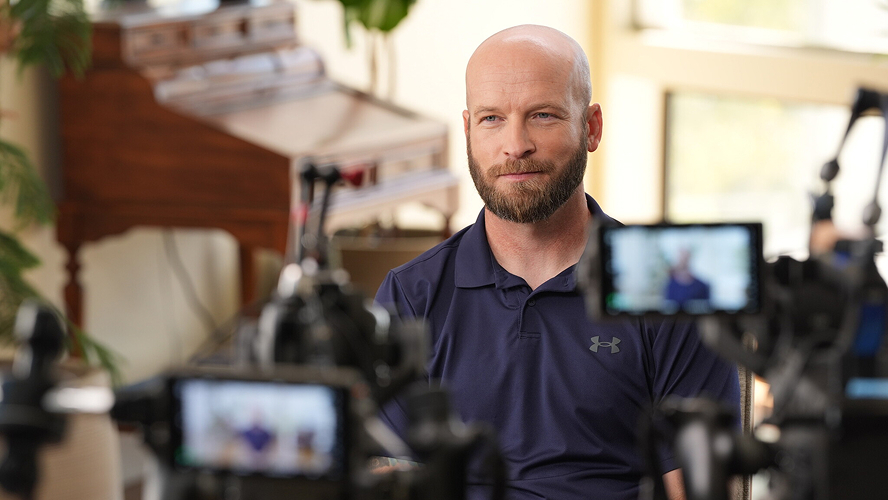
My mental health treatment was different than what I expected because I had compartmentalized so well that I thought I was fine. And then I also, for a long time, didn't think that I really did enough to warrant seeking out, there was no way I had PTSD. Like it didn't even register that I might still be struggling with stuff and that, mental health and trauma and struggling looks different for every person.
Hi, I'm Lacy. I was in the Marines and I was in from 2003 to 2008. I was a 6322, which was Avionics on the 46s, and then I cross-trained to become an Aerial Observer. There were several challenges or events that impacted my mental health, and it took me a while to unpack exactly how much it did. I did two deployments and the second one was a boat ride. I was cornered a couple times. I was given a direct order to take off my clothes by an officer, and I ran with that one and I did report it up. And that's the thing that I wish more people probably realized is that, report it. On the flip side, I was told if I was going to make a career out of it, to let it go. But because I knew I was getting out, I did not let it go.
It affected my mental health, insomnia, anxiety. It's not depression to the point where like, you think of it, but just where life can feel really hard some days and that, like, "what am I even doing here? Is this worth it?" The "why me," the victim shaming, even in your own head. I definitely went through a period of self-medicating. Alcohol is an easy go-to. And then I stopped drinking and that was probably when you had to face everything.
I transitioned out of the military. I got out and I lost that sense of purpose. It was so easy. When you were in, you knew what you were doing, you knew where everybody was. And then not having that, I kind of just fumbled around. I had no idea how to be a civilian. What led me to seek mental health treatment, I was going to kill myself otherwise. I figured that wasn't really the best option, so I should probably talk to somebody. I called the Veterans Crisis Line and that lady was great. If I knew her name and her address, I'd send her flowers every year on that day.
So my mental health diagnosis is PTSD with anxiety and depression. Mental health and trauma and struggling looks different for every person. I think everybody, Veteran or not, should talk to a therapist at least once just to kind of learn how to handle life a little bit better. And then especially Veterans, start talking to somebody as soon as you can.
Hobbies or activities that help, obviously horses. Horses help. Their heart rhythm, their breathing is so much slower than ours. That's why they're so effective in therapy programs. They do help regulate your heartbeat. They help slow things down. Training them definitely makes you manage your emotions.
Yoga has definitely helped me. What probably moved the needle the most for me was I went to a yoga teacher training for military instead of just talking, but to where you actually work through what your brain is telling you is happening and you realize you can rewire things. I wasn't carrying stuff around that I didn't need to anymore. Anything to get you out, breathing air, moving your body, that has really helped me too.
Advice for any Veterans that have experienced MST. It's not your fault. Definitely talk to somebody. And if you think it didn't affect you, I can promise you it did.
I wanted to come share my story because the more people that talk about things, the more people that can find a relation point and hopefully make choices that help them. Now that I've worked through the biggest parts of it, it's nice to kind of know what having fun in life is. So find places where you kind of feel like you belong and you can go do stuff with other people. I think that's a huge part because you don't heal in isolation. You heal when you move through things with other people.