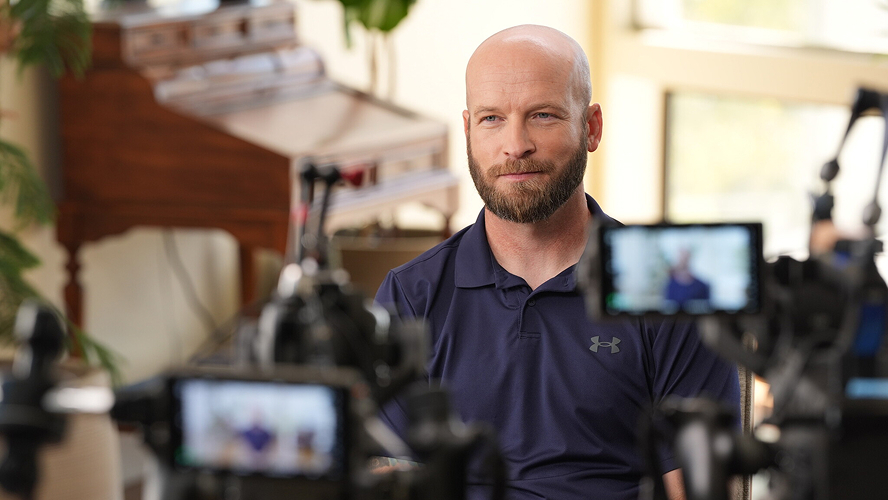
That was really hard back then because you didn't want to let people know you were in the military, especially in Vietnam. People were mean, just mean to us. Whenever I see a Vietnam Veteran, I say, "Welcome home." because we didn't get that.
I'm Allen. I served in the United States Marine Corps from 1965 to 1969. My primary MOS was 2531 Field Radio Operator. My secondary MOS was Ariel Gunner. Well, I always wanted to serve my country. My father was in the Marines. My uncles were in every branch of the service, Army, Army Air Corps, Paratroopers, all of them World War II. Grew up admiring them, especially my dad.
Vietnam was especially bad because of all of the working with medevacs and the losing friends and people I'm fighting with, having to do the right thing so they don't go into shock when you're working with guys that are really, really hurt bad.
When I transitioned out, I had issues, physical issues. I didn't think about mental. I'd get stressed and then I'd get angry. Then I'd get really depressed after that. So it's ups and downs, ups and downs. I'd do things that were dangerous without thinking about what I was doing. I was kind of suicidal. My wife Patty, she took me to a VA doctor and she said, "Now you fix him." He was actually in the Army and he was a Huey gunship pilot. Prior to Vietnam, they didn't know about PTSD. They didn't know what that was. And then he told me I had PTSD. He says, "Where you are right now, it's like picture a bucket is full of water and it's going to overflow. If we get down to a third full, that's really going to be good for you because you're full on full bucket all the time right now."
Learning how to control things is an important part of therapy. I think learning how to control what you do, what you're thinking about, how you go about your day, things like that. Counseling is something I undergo still. One of the things I would encourage Veterans to do, like the things that really bother you the most, you need to tell somebody.
Oh, I love to fish. Do a lot of trout fishing here in South Dakota. I love going with my grandchildren, teaching them how to fish. I fish with my wife Patty a lot, just her and I. Patty is the love of my life, my partner. We're together twenty four seven and always have been.
PTSD doesn't go away, at least not for me. I call it the dragon. I try to stay two steps ahead of the dragon all the time. And I'm a lot more successful at doing that now because of all the therapy and all of the instruction that I've been giving on how to manage that PTSD. I'm better. If you are in a bad place, you're depressed or you just blow up, you're doing things that you shouldn't be doing, or you're self-medicating, you're on drugs, alcohol, you need help. And the VA is where you go to get it.