Managing PTSD Is Easier With a Team, Veteran Finds
5 minute read
Managing PTSD Is Easier With a Team, Veteran Finds
5 minute read
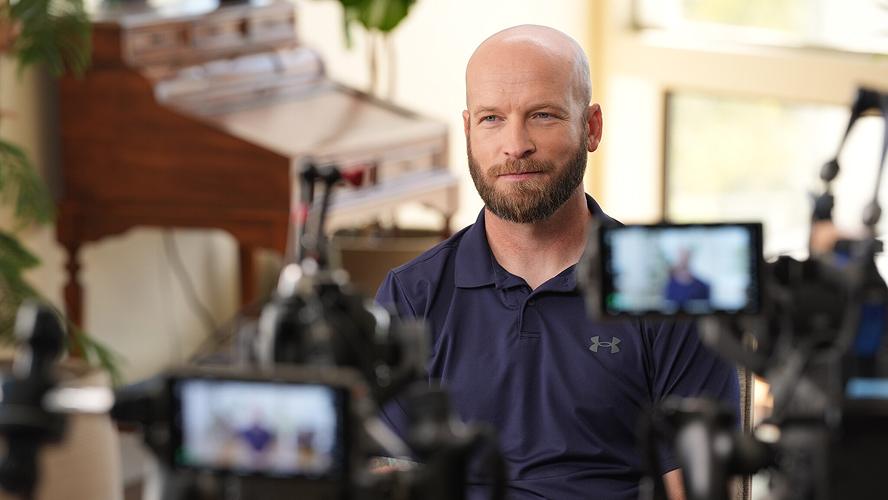
After decades of military service and many deployments, Keith came home with challenges that no single person or quick fix could solve. Sleepless nights. Self-isolation. Other symptoms and effects of posttraumatic stress disorder, military sexual trauma, and depression.
But, as the Army Veteran discovered, a whole team of people was ready to help him through the process of recovery if he could take what he describes as the hardest step of all: “Taking the first step towards the unknown.”
What follows that first step? “The journey’s going to be tough, but it gets easier as it goes along,” Keith says. One reason it gets easier, he adds, is because there’s a team of people who are ready to help.
“I got my family support system. I got my nurse practitioner. I got my primary care physician,” he says. He also has counselors. And he has fellow Veterans who support each other as comrades.
Deploying abroad and feeling out of place at home
Keith’s many deployments during his 28 years of Army service—including Bosnia, Germany, Turkey, Honduras, and Ecuador—left him feeling uneasy whenever he came back. “I would come home on leave, and I just didn’t feel right. Because while I was off doing my mission, the world was still turning,” he says.
His mental health challenges began while he was still in the Army and contributed to a medical discharge. After nearly three decades in the military, returning to full-time civilian life left him feeling even more out of place. “I didn’t fit in anymore,” he says. And with the symptoms he was experiencing, he knew he needed help.
Finding many paths to healing through residential rehabilitation
Four months in VA residential rehabilitation gave him a solid start, providing him with comprehensive treatment and rehabilitation services in a structured, 24/7 supportive environment. The best part, Keith says, was that the program offered him different options for addressing his mental and physical challenges and building camaraderie with other Veterans in the facility.
“They had many ways of doing things, and not being in particular with one way,” Keith says. Residential rehabilitation programs work with each Veteran to find the best fit based on individual strengths, needs, abilities, and preferences.
Charting a new course with camaraderie, nature, and a paintbrush
After completing the program, Keith found other ways to maintain his progress and continue healing.
He helps and receives support from other Veterans through a Veterans Empowerment Center in his area. “That’s like-minded Veterans coming together for a cause. Because we were all comrades in the military, and we’re still comrades,” he says.
He spends a lot of time outside as a self-help strategy. “I get a lot of energy from nature,” he says. He also finds interests that nurture him, especially painting, whether on his own or as part of a group activity.
“I’m a nerd by trade, so being in the art museum sets me right,” he says. “We’ll pick a gallery, we’ll pick a painting, and we paint our version of that painting. It helped me heal.”
Through it all, he also knows he can continue to rely on his team. “There was always an angel there to help you along the way,” he says. “And I think I helped them also.” He just needed to take the first step.