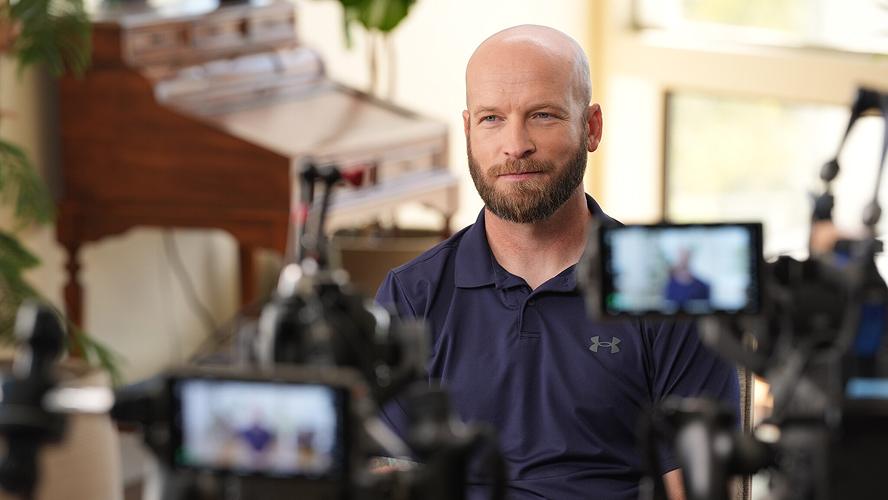
Help for Depression: A Veteran Shares What Worked
4 minute read
Help for Depression: A Veteran Shares What Worked
4 minute read
The depression and anxiety that have often affected Michelle don’t stem from experiences from the Army Veteran’s time in uniform. Instead, they’re associated with more-universal challenges of life, such as adjusting to a big career change, navigating divorce, and grieving a parent’s death. And that, she says, is why she wants to share her story with other Veterans.
“All we ever really see about mental health counseling are the extremes. And so when I first even talked about this, I didn’t think my story was significant enough because I don’t have military sexual trauma, I don’t have PTSD that’s combat related,” Michelle says. “There’s a lot of us that just have everyday life, that will sometimes just need some help getting through or processing or really just finding a way to cope.”
Through her story, she hopes to help other Veterans understand when and why they should ask for help.
What are the symptoms of depression?
Two common symptoms of depression are feeling sad or hopeless and losing interest in daily activities. But people with depression can differ significantly in their symptoms or feelings. For example, some people eat more or sleep too much each day, while some eat less or sleep too little. Some people feel restless; others have so little energy that even moving seems to take a great effort.
Michelle found that her primary signs of depression are emotional numbness, self-isolation, and a loss of energy and focus. Her ability to recognize her symptoms is also one of her keys to managing them, signaling that she needs to apply tools she’s learned in therapy. She also doesn’t hesitate to go back to her therapist for help.
“I like to call them my tune-ups,” Michelle says of the visits.
What factors can contribute to depression?
Stressful situations or traumatic events that sometimes occur in military life can be associated with depression in Veterans and service members. But many other kinds of life changes and challenges, from the birth of a child to the death of a family member or friend, also may be associated with depression.
Michelle associates her challenges with depression with a series of life experiences.
After serving for eight years as a tank-automotive maintenance material manager, she had a hard time managing the transition to civilian life. “What I didn’t anticipate was how much I was going to miss the structure and also the credibility, because when I got out of the military, I was only 28 years old,” she says. “I had already been in charge of quite a bit and had a lot of leadership experience, and I grieved it in a way.”
Michelle also grieved the loss of her marriage after both she and her husband, also an Army Veteran, left the service and found themselves searching for a post-service identity. It was during this divorce process that she first sought counseling.
“It took me a while though to find a counselor that I felt like really understood me, really got me, if you will,” she says. “It was a little bit of a journey.” But she says her persistence in finding the right people to help her was well worth it.
What are treatments for depression?
Treatments for depression can involve therapy and medication, or—as Michelle found—a combination of the two. Cognitive behavioral therapy proved especially helpful for Michelle, showing her how to manage difficult emotions instead of trying to push them away.
“Tools I have learned through therapy and really use the most with the cognitive behavioral therapy is really just to feel the feels. To stop trying to avoid that so quickly or if something negative comes up to try to numb or avoid,” she says.
“One of the things I’ve definitely learned, especially about grief, through the VA, is that if you don’t grieve it now, you’re going to get it later, because it’s going to show up,” she adds. That’s why she returned for more counseling after her mother’s death.
In addition to benefiting from medication and therapy, Michelle finds strength in community. She created new social bonds by joining a dance troupe in New Orleans called Disco Amigos, which participates in Mardi Gras parades and other social events. Michelle says the support she receives from its members helps remind her that she’s not alone.
“You don’t always choose your family, but you can make your own family,” she says.
The community of women Veterans at VA also is a strong one, adds Michelle, a frequent user of VA’s women’s health services.
“I would just say if you are someone who’s struggling with trust in the VA, give it a try,” she says. “You may be very surprised at how well they’ll take care of you.”