Understanding When Anxiety and Stress Become a Problem
5 minute read
Understanding When Anxiety and Stress Become a Problem
5 minute read
Anxiety and stress are normal parts of life. In small doses, these feelings can even be helpful—like when they push you to study harder, meet a deadline, or prepare for a work presentation.
But there's a difference between everyday anxiety and stress and the kind that interferes with your well-being. And as a Veteran, your challenges may be connected to experiences from your military service.

Managing stress and anxiety to live well
How can you tell the difference between normal and problematic? How do you know when you need to ask for professional help? The experiences of Veterans Lawrence, Catrina, and Thomas provide real-life examples that may reflect how you’re feeling. It’s also helpful to know the signs of conditions such as anxiety disorders and posttraumatic stress disorder (PTSD) and to ask yourself questions like these:
- Are the anxiety and stress temporary or sticking around for months?
- Are these symptoms improving, staying the same, or getting worse?
- Are they interfering with relationships, work, school, or self-care?
Lawrence: Reaching a breaking point
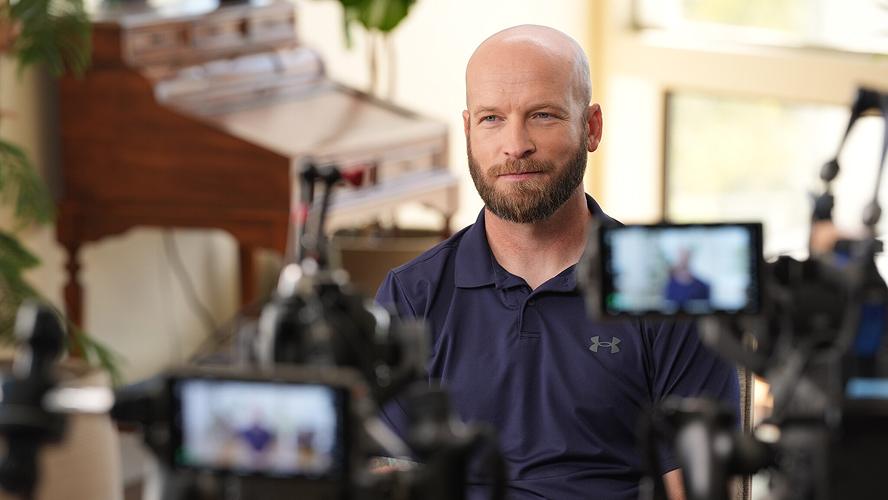
Lawrence, a U.S. Army Veteran, found it difficult to make friends and build relationships. He also didn’t respond well to being in crowded areas or hearing loud noises. And he often found it difficult to sleep.
“Coming out of the military, I started to identify those struggles—the anxiety, depression,” Lawrence says. “I kind of reached a breaking point, and I decided to make it a priority in my life to seek mental health treatment.”
In therapy, he traced his challenges to PTSD from his military experiences, including the loss of a friend in 2012 during a deployment to Afghanistan. “It still affects me today and every day,” he says.
Medication and therapy helped, especially group therapy with other Veterans, whose stories made Lawrence realize he was not alone in his challenges. Therapy also taught him methods for deescalating his anxiety, like breathing exercises and medication.
“It’s improved my relationships significantly,” he says. “It's definitely made me a more patient person.”
Catrina: Acknowledging her stress
Catrina, a U.S. Army Veteran who deployed to Iraq, tried to convince herself she didn’t have a problem after transitioning to life as a civilian. Not wanting to go grocery shopping unless it was late at night, when the store was nearly vacant? Catrina brushed it aside. “I just don’t want to deal with people,” she told herself.
“I think that's easier to say than ‘I feel anxious in public right now,’ or ‘I'm overwhelmed with all these people around me. It's too busy.’ I don't think that's easy to acknowledge or say about yourself,” Catrina says.
She didn’t reach out for help until, years after leaving the military, she experienced a flashback. That’s when she contacted a Vet Center in her area.
“As you reach out and as you talk to these specialists, these therapists, these counselors, or church support groups, what you learn is it’s OK to not be OK, that you just have to acknowledge what are the stressors, or just acknowledge that you have stress,” Catrina says.
She continues to reach out to specialists as needed, whether the anxiety and stress stem from her military experiences or from her civilian career as a law enforcement officer. “They know the stresses that I still am undergoing. And sometimes they’re connected. Sometimes they’re not,” Catrina says. “Sometimes it’s just you’re not taking care of yourself, and you need to hear that.”
Thomas: A culmination of events
Long-lasting anxiety and stress don’t have to stem from a particular event or trauma to become a problem. It’s the impact of those feelings, not their source, that matter most for assessing the value of seeking help.
Transitioning to civilian life after 21 years in the U.S. Navy, Thomas found himself becoming irritated or anxious often and quickly, especially when people didn’t behave in the way he expected. Sometimes, these emotions would also trigger feelings of depression.
“Posttraumatic stress disorder, you had a tragic event that happened to you. Where mine, you know, it’s a culmination of events, but it’s created the anxiety that I suffer from,” says Thomas, who didn’t experience any direct combat but did witness a lot of devastation and destruction.
“Not every trauma that comes out of the military has to be with firearms, explosions, or combat deliverable,” he adds. “It could come from humanitarian relief efforts. It could come from sexual assaults. It could come from harassment. It could come from having bad leadership.”
Whatever the source of the challenges, treatment can help. “Find a counselor, find an advocate for you, and get through those difficult times,” Thomas advises, “because it's going to make your life much more fruitful in the end.”