Veterans Share How Getting Help Led to Helping Others
4-minute read
Veterans Share How Getting Help Led to Helping Others
4-minute read
First, they started their own recoveries through treatment. Then these 4 Veterans found new purpose in giving back.
Getting help for themselves
Michael says his service as a U.S. Army missile repairman left him feeling beaten down and anxious about his future when he transitioned to civilian life. He tried to cope by misusing alcohol, which only made things worse.
“One beer turned into a bottle of whiskey, turned into not showing up for work, turned into unemployment, turned into everybody in the family suffering,” he says. “I was homeless and I was a full-blown addict. I got arrested. I had a family intervention.” The intervention led to treatment and support from VA, including prolonged exposure therapy and cognitive behavioral therapy, which helped put him on track to sobriety and recovery.
Ray says he enjoyed the camaraderie he experienced as an infantryman in the U.S. Army and felt lost when he returned to civilian life. Like Michael, he turned to drinking. “My entire life revolved around me consuming alcohol,” he says. His addiction cost him his marriage, children, home, career, and freedom—until Veterans Treatment Court saved him by compelling him to get the help he needed.
For Michelle, a U.S. Air Force Veteran, one-on-one counseling and other mental health treatments after her service helped her regain her confidence and chart a new course. The Veteran had been sexually assaulted by a security worker at an Air Force base while on a temporary duty assignment there
“I used to always think that everything was my fault, and I had to learn that it wasn’t my fault,” she says. “I learned that you can’t take care of anybody else until you take care of yourself.”
Sean, who broke most of the bones on the right side of his body while serving as a U.S. Army infantryman in Iraq, says his constant involvement in combat took a toll on him mentally as well. “Your emotions are broken, and you have to go through and figure out how to use them again,” he says.
His participation in art therapy, group therapy, and peer support groups has helped him with his anger, isolation, and other symptoms of his posttraumatic stress disorder, as does the painting he often does on his own. Now Sean wants other Veterans to know: “You can not only make it through, but you can live a good life and you can help other people.” Which is what Michael, Ray, Michelle, Sean, and many other Veterans have done.
Helping other people
Michael says he now spends a lot of time volunteering, including serving food to people who are experiencing homelessness and providing peer support to fellow Veterans who are recovering from substance misuse. “Peer specialist is a job that I can provide service to people that are in the same situation as I am and show them that there’s a way out of it,” Michael says. “It provides a lot of hope and a lot of success.”
“My whole life really is revolved around recovery now and helping others and paying back,” he adds.
Ray founded Operation Restoring Veteran Hope. The nonprofit provides free services and programs for Veterans who are experiencing addiction, posttraumatic stress disorder, or suicidal ideation, or who have been released from prison or prison rehabilitation.
“It’s to help our Veterans to be hopeful for a better future, to let go of all that guilt, all that pain,” Ray says.
Michelle joined the leadership of The Mission Continues, which challenges Veterans to rebuild a sense of purpose through community service.
“It benefits my mental health because I feel like I still have a purpose,” Michelle says of her volunteer leadership and participation. “Instead of just curling up in front of the sofa and watching Netflix and letting the world pass me by, I want to do something better with my time. I want to be a productive member of society, and I want to give back to my community. I really think it’s been transformative in my recovery.”
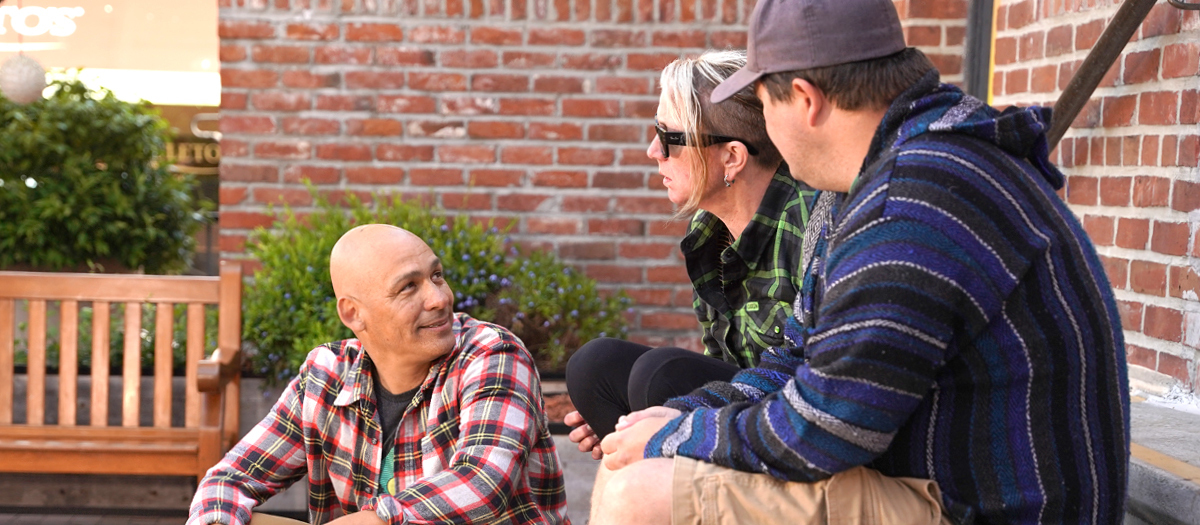
Sean also supports others by volunteering, which includes organizing weekly Vet coffees. “We have Afghanistan combat Veterans, we have Iraq War Veterans, we have Vietnam Veterans. You know, I can inspire you, and you can inspire me, and we can get through this together,” he says. Sean believes his volunteering is essential for maintaining his recovery.
“I was just a really rough and angry, broken person,” he says. “And if I didn’t have art, if I didn’t have community, if I didn’t try to help other people, I wouldn’t have made it this far.”